Monday, February 22, 2021

The Value of Living Books and Reading Aloud to Your Child(ren)


According to Charlotte Mason, a "living book" is usually written by one person who has a passion for the subject and writes in conversational or narrative style. The books pull you into the subject and involve your emotions, so it's easy to remember the facts and events. Living books make the subject "come alive". They can be contrasted to dry writing, like what is found in most encyclopedias and textbooks, which basically lists informational facts in summary form. You might be surprised to find that living books are available in most school subjects. (https://simplycharlottemason.com/faq/livingbook/)

The above pictured living book is a great children's book with beautiful pictures. I read this book with my youngest son and then found the lyrics to the song "Rockin' Robin" and played the song for him and taught him the words, so we combined this book and a song for science and music.

As for reading aloud to your child(ren), not only is it a fun activity, but it is an opportunity to increase the bond between you and your chidl(ren) and to create lasting memories. I read books aloud to all of my boys all the way to their high school graduation, and my oldest says it's still one of his favorite homeschool memories. I always do my best to change my voice for each character's dialogue lines, and even at the high school level, my boys enjoyed our read aloud time. My oldest also said, when he was home on school breaks from college, if he was doing something in the same or next room where I was reading aloud to our youngest son, he would become distracted from his own activity and find himself listening to me.

A favorite read aloud memory of my two older boys is my reading of "Huckleberry Finn" by Mark Twain. That book drove me crazy, and I would get frustrated when the bad guys kept showing up wherever Huck went for quite some time. The boys found that quite funny.


Monday, August 31, 2020

Homeschooling Because of Covid-19

 The first thing I would like to express is that homeschooling does not have to be "school at home". It doesn't have to take up the whole entire day, and it can be fun for both parent and child. It doesn't have to mean six hours on Zoom or a cyberschool.

In homeschooling, you can read great books with your kids or have children who can read, read on their own. I will tell you from my years of experience as a homeschool mom, my boys' favorite part of homeschooling was having me read aloud to them. I did my best to use different voices for different characters, which was a big part of why they enjoyed it, but you don't have to do that if you prefer not to. However, just sitting together on the couch and reading aloud to your child(ren) creates special memories and a special bond for you and your child(ren).

Another great thing about books is that you can use one book to cover more than one subject. Here are some examples for different ages:

One Tiny Turtle is a great book to read aloud with kids in Preschool through first or or second grade, and it's a great story that allows your child to learn about the life of a Loggerhead Turtle. This can count for English because you are reading literature to your child, and for science because it teaches about the life of a Loggerhead Turtle. You can even add an art lesson by asking your child to create their best drawing of the tiny baby Loggerhead Turtle.

Hitty, Her First Hundred Years is a great book that you can use in so many ways! This was one of the first books I read aloud to my youngest son. It's great for second through fourth or fifth grade students. It follows the story of Hitty and what happens to her in one hundred years. I used this book to have my son create a booklet in which he created maps of the travels of Hitty, he drew and colored pictures of some of his favorite pictures in the book, and he wrote about some of his favorite scenes/adventures. Therefore, we could count this for English including writing, Art, and Geography.

A Murder for Her Majesty was a favorite of my youngest son's during his middle school years. Reading this story allowed us to discuss many things that happened in the story. This can be counted for both English and History, and for additional history credit or to have something to show your evaluator, you could have your child write a report on Queen Elizabeth I or the Yorkshire Cathedral.

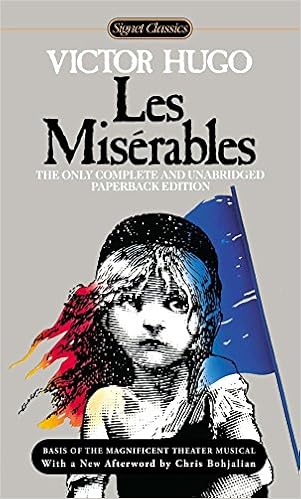
Les Miserables is a great story to read aloud with your high school student or have them read on their own. My oldest son enjoyed this book so much the first time, that he chose to read it a second time. All of my boys have a love for learning and reading, but my oldest is the most self-motivated, and he never liked when we took our summer break. So, during the summer break after his 8th grade year, he chose to read the complete "unabridged" Les Miserables and found so much about the French Revolution in the book that when he finished reading the book, he wrote a report on the French Revolution over his summer vacation! Then in his 11th grade year, he took a class at a homeschool co-op with a teacher who taught the "abridged" version of Les Miserables, and at the end of the reading of the book, the teacher showed the dramatic movie version of Les Miserables, starring Liam Neeson, to the students. So, this book can be used for English and History, and it also gives you so many great things to talk about with your student if you read it with them because there are so many themes that run through the book: forgiveness, redemption, revenge, and so much more.

Again, if you have any further questions, please feel free to leave a comment and I will respond. Also, I highly suggest you click the "Homeschool Legal Defense Association" link on my sidebar and search for your state's Homeschool Law and read it carefully so that you understand exactly what your state requires. If you need help understanding, you can contact someone from the Homeschool Legal Defense Association for further information.

If you live in Pennsylvania, I can answer your questions because that is the state we live in.

Saturday, July 18, 2020

Homeschooling Offers Opportunities


Wow, it's been a long time since I posted here. The past five years have seen my two oldest sons go away; one to college and one to Bible school, study and graduate from those educational facilities.

While they were busy furthering their education, I continued schooling my youngest son, who is seven years younger than my middle son. In addition, I have been working on writing my first historical romance novel and beginning a writing career, (but that journey is on another blog). 

I guess I didn't feel like I had much in new ideas or resources to offer during the past five years. But now, with Covid-19 affecting whether schools may or may not open in September and talk about the children having to wear masks and other regulations that parents are uncomfortable with, more parents are choosing to homeschool. Many wondering how to go about it or planning to implement something like "public or private school" at home.

I hope you will visit old posts here to see what I did with my first two sons in their homeschool years because most of those things are still relevant. In addition, I checked all the links to the Homeschool Curriculum Suggestions, Important Homeschool Links, Homeschool Resources, and the Homeschool Related DVDs to make sure they are still functioning and taking you to the correct websites, and all those, still listed, are, indeed, fully functional.

If you are wondering what the two photos at the top of this post are: the first is the "ink pen" from inside the squid, which is the second photo. My youngest son dissected this squid last school year in a Biology Labs class taught by a staff member at our local County Parks and Recreation Center.

In this post, I just want to encourage you, if you are homeschooling for the first time, or even if you've been homeschooling for a while. You don't have to homeschool alone, even if your location doesn't offer a lot of homeschool resources or groups. I will be posting here more frequently and my next post will be about homeschooling during Covid-19 because homeschooling as also been affected in some ways.

If you have specific questions about how to begin, what to do for a certain age or grade, or how to create a schedule, or anything else you are unsure of, please look at my "About Me" page. You will find my email address on that page. Please feel free to contact me personally, and I will give you information and encouragement based on my 17 years of experience.

Monday, September 14, 2015

What I've Learned About Co-Ops

This is my thirteenth year of homeschooling.  One of our boys has graduated and is in his first year of college, after taking two years off, in an honors program.  Our second son will graduate high school at the end of this school year, and our youngest son is in fifth grade this school year.

We became involved in a small co-op, that was just starting out, in our first or second year of homeschooling.  After two or three years, the lady who ran that co-op decided to leave, and I and another lady decided to take over because we didn't want to lose the co-op; both we and our children enjoyed it.  We ran it for about three or four years and then passed it on to someone else, but we continued to be involved in co-ops every year.

Now, let's define what a co-op is and what its definition is.  In our area, all of the co-ops we've been a part of, which is a total of four over the years, have been run the same way, and from what I know from talking to other homeschoolers in other co-ops, it seems that the majority of co-ops in our area are run the same way.  That is that moms have to teach or be a helper in a class and classes consist of children in several age groups or grades (i.e. Pre-K -- K-5; 1st - 3rd; 4th and 5th or 4th thru 6th; 6th - 8th or 7th & 8th; and 9th - 12th grades).  Each class is similar to a school classroom as far as a teacher teaches the subject and there is a helper in the room to help in whatever capacity is required.  The main differences between a co-op classroom and a regular classroom is that if kids are wiggling, it's okay, if they are drawing while listening to the teacher, it's okay, and the teacher tries to include activities that work for all of the learning styles, which means the class requires listening skills, visual skills, and hands-on activities.

Now, here are two definition for the word 'cooperative', (co-op for short), 1) involving mutual assistance in working toward a common goal, and 2) a farm, business, or other organization that is owned and run jointly by its members, who share the profits or benefits.

As I thought about the meaning of the word cooperative, I began to think that the co-ops in our area have stretched the definition and created something similar to school, and I have to admit, that we chose to homeschool for several reasons:  because our boys were facing issues in the Christian school we had them enrolled in that I didn't think we needed to deal with; because we want our boys to grow up knowing and believing in the one, true God and we wanted that to be part of their everyday learning; because we want them to know the truth of history; and because we want them to be able to learn at their own pace according to their interests.  (The first two reasons were our original reasons, the last two reasons have been added over the years.)

Our two older boys have enjoyed these co-ops throughout their school careers, and our youngest enjoys them too.  However, for me, this year, I began to desire something different.  I want our youngest to experience some of the things that our older boys experienced when they were younger that are currently missing from our homeschool.  Also, I was struggling with some of the things going on in our current co-op, mostly administrative things.  Then a friend came to me and expressed similar thoughts, and we began talking about what we really want and we started writing ideas down and brainstorming.

*********************************************************************************

So, what's new?  Our brainstorming session actually turned into a plan; a plan we were going to begin next school year, and that we were praying about.  Then God stepped in and set the timing for us.

My friend and I each had a homeschool mom call us and ask us for help because the Governor of PA shut down some charter schools, and the one they were going to send their children to was now not operating, and school was to begin by the end of the week.  After these conversations, I called my friend and she and I were talking about this situation, when we both received the same text from a mutual friend asking about getting together once a week for a physical education activity.

We saw that as three affirmations that our plan was a good one.  We also saw it as God telling us we need to start it this year, not next year.  So, we got together again and finalized the plans.  Then we spoke to the ladies, and they loved the idea.

Today was the first day of our new homeschool group, which we are not calling a co-op, even though it actually is what the definition of 'cooperative' says it should be.  We are using a Unit Study approach and including kids from 1st to 12th grade, although our current group is 4th through 12th grade students.

Now let me tell you what we did today, as this is the plan for each week:
At home, before we had our first meeting today, each of the families involved, read an assigned section of The Door in the Wall by Marguerite De Angeli.  This is a book about Medieval times.
Today, I taught an English lesson based on the book, discussing literary elements and which ones are in the book.  Then I gave them two short writing assignments that must be completed in two weeks, as next week we will not have English.
Next, another mom taught History, and she went over the feudal system and how people each had their specific place in the community from the King, to the Lords, Barons, Earls and the Clergy, to the Vassals (knights) to the Peasants.
Then another mom taught Art, and she had the students make their own hardcover books that they can write and/or draw in because in Medieval times, the monks made their own paper and books.
Then we had a lunch break and after lunch, another mom taught a physical education class, where the students played two games that children in Medieval times played.  That ended our day.

The plan for next week will be:  one mom teaching Science, two moms working together to teach Geography, one mom teaching Music, lunch, and then everyone can go home or just socialize for an hour or two.

During week three, we will finish the book with:  me teaching another English class, another mom teaching an Architecture/Art class, another mom teaching History, lunch, and one mom teaching cooking Medieval food.

A week later, we will be going on a field trip to a museum that will be having a Medieval theme exhibit.

So, that's the new plan:  all moms participate and work together for a common goal, all activities are related but include multiple subjects; all students work at their own level but everyone gets to participate together and learn from each other and help each other.  And, we are a small group, and we plan to keep it that way because we meet at a mom's house and rotate houses each week so that it doesn't become a burden to anyone.  We all bring supplies and share our resources.

The results of the first week, according to the students:
1)  It's fun, and I can do more here independently than I can at the other co-op.
2)  I really like it because it's more relaxed than the other co-op and I was able to talk to other people, and I liked that it was on a Monday because it gave me something to look forward to over the weekend, and now it helped me to feel like doing school the rest of the week.

The results of the first week, according to the Moms:
1)  It is fun and relaxing because we participate, but also have some down time in between and there's no pressure about time frame as long as we end by our end time.
2)  It is more community-like and less stressful.

We are all looking forward to continuing this homeschool group.

Saturday, February 14, 2015

Anthony Barr | #TrustParents


Here is a speech my son presented at Demme Learning (the creators of Math-U-See), his employer, at their school choice rally in January.  I am very proud of him and it was such a blessing to me to hear this speech, as he talked about the value of his homeschool experience as I taught him at home.  I hope it will inspire you in your homeschool journey as well.


Thursday, January 29, 2015

School Choice/Trust Parents

I know it's been a really long time since I have posted here, but I find that I have become very comfortable in my homeschooling and don't see much as new to post for those of you who read this blog.  I apologize for that.  Also, I am also trying to become a successful and, hopefully published, writer in addition to homeschooling my two remaining school age children and that requires a lot of my time.  I also have two other blogs, one for my writing, and another on healthy eating/living.  I rarely publish on the healthy eating/living one either.  There just aren't enough hours in a day to do all of the things I feel I should be doing, so I have to prioritize.

Today, however, something new happened that I thought would be important to share here.  Today is "School Choice" Day, and I attended a small School Choice Rally this morning at Demme Learning, the creators of Math-U-See, and now, Spelling-U-See.

What is "School Choice"?  You may ask.  It is concerned citizens, parents, politicians, etc., who are trying to find ways to make it possible for ALL parents to be able to choose the best place for their child(ren)'s education, be it private school, private Christian school, public school, or homeschool.  Right now only people who can afford to choose have the ability to choose where their child(ren) are educated, but what about those who live in poverty or the single parent working two jobs to put a roof over their heads and food on the table -- shouldn't they be able to choose the best possible education for their child(ren) too?  Do we not think that those parents don't care as much for their child(ren) and their child(ren)'s future as the parents who can already afford to make a school choice?

The CEO, and a couple of other Demme Learning employees, including my oldest son, a lady from a local Christian school and Senator Ryan Aument all spoke on this topic at the School Choice rally:


                                                Ethan Demme, CEO of Demme Learning                                                    


Senator Ryan Aument


Lady from Dayspring Christian Academy


My son, Anthony, PR Assistant at Demme Learning


Amy Spencer, Marketing Director at Demme Learning


All of the speakers did a wonderful job, and another key piece that was talked about was "Trusting Parents".  Because parents know and love their child(ren) and want better for their children than they, themselves, had, they should be trusted to know what is best for their child(ren) and to make the best choice for them.  

The lady from Dayspring Christian Academy gave information on some Tax Credit programs that are available to help parents be able to get their child(ren) into private schools they wouldn't otherwise be able to afford.  It has to do with businesses contributing to the schools.  I don't know if these programs are available in all states, but they are available here in Pennsylvania.  You can find out more about the EITC (Educational Improvement Tax Credit) program here and the OSTC (Opportunity Scholarship Tax Credit) progam here.  

Senator Ryan Aument wants to get the community to work together to make the necessary changes to enable ALL parents to be able to have School Choice because he Trusts Parents.  He also spoke about the fact that public schools that are failing are concerned about what would happen to them if everyone was able to implement School Choice, and Senator Aument is aware that they could face a decrease in students, but he has ideas for solutions.  He gave a very visual picture to stress his point about school choice when he said that he vividly remembers learning about June 11, 1963 and seeing the photo of Senator George Wallace standing blocking the doorway of the University of Alabama to prevent two black students from entering to get a better education, and Senator Aument said, "We are standing blocking the doorways of the failing schools and preventing students from leaving, which is just as much of an injustice."

Monday, April 7, 2014

What About State Required Testing?

State testing is nothing to get worked up about.  It really has very little importance.  It is just one more thing the government wants us to do.  So, in Pennsylvania, we have to have our kids take a standarized achievement test in 3rd grade, 5th grade and 8th grade.
There are quite a few tests to choose from, so how do you know which one you should have your child do?  Well, I say that depends on your child.  My oldest child had taken the Iowa Basics test at each of the three required grade levels, my middle child took the WRAT in 3rd grade, which is no longer an acceptable test to the state, the CAT test in 5th grade and the Iowa Basics test in 8th grade, and my youngest just had his first testing and he took the PIAT test.
The CAT and the Iowa Basics are written tests where the students read problems/questions and color in the circle of the answer among the multiple choice possibilities.  The PIAT, which is similar to what the WRAT test was, is an oral exam, where someone administers the questions to the student by showing them questions, sentences, pictures and asks a question and the student has to orally answer the question or choose the correct answer from 4 visual options.
The written tests can be challenging and can cover most of your school subjects.  The verbal PIAT test simply covers: general knowledge, reading comprehension, spelling, vocabulary and math.
For students who are not good test takers or who fear test taking, I suggest the PIAT.  For students who work well with paper and pencil and who are comfortable with test-taking, I suggest one of the written tests.  The three tests I mention in this post are the only ones that I am familiar with.  I find all of the tests quite useless as I know what my child(ren) are learning, what their strong subjects are and what the subjects are that they need a little more work on because I watch them daily as they do their lessons in our home.  The test may help pinpoint some weaker areas, and that's about all the good they are.  I certainly am not the kind of mom who feels the need to put my children through these ridiculous tests more than the state requires, but I know some who have their child(ren) take them yearly, which I see as a lack of confidence in their own judgement and teaching ability.
If you are an involved homeschool parent, you know your child(ren) better than anyone else because you spend the most time with them, so if you are happy and pleased with their abilities and progress, don't worry so much and don't stress yourself out, and don't put too much stock in these achievement tests.  More often than not, homeschoolers test well above their peers on all the tests they take.

Friday, June 14, 2013

How to Determine Your Homeschool Schedule

There are a couple of things to consider before setting your homeschool schedule:  1) when do your children learn best, morning or afternoon -- you may not be able to determine this until trying one or the other and seeing how well it works; 2) what is your husband's work schedule -- if he works a shift that requires him to sleep during the day, you may need to figure out how to school around that, or if he works a shift where he is only home a few hours during the children's awake time, you may want to be sure to spend that time with him and have him be involved and then do other studies while he is working; 3) consider yourself, allow flexibility for unexpected events or emergencies to avoid being stressed when deadlines loom and you haven't finished schooling yet.

That being said, I'll explain my choice of schedule to give you an example and give a few other options.  My husband works during the day and is home evenings and weekends and I like to get work done in the mornings and have the rest of the day to enjoy and do what I enjoy, therefore, I trained my children that way as well, because I found that if I allowed any play time before school work was complete, they had a hard time getting back to school work.  Therefore, our rule became "schoolwork right after breakfast until it is finished, although we take lunch when it is lunchtime.  Then when schoolwork is finished, the rest of the day is your time to do what you want."  This has worked very well and most days, we are finished with school by lunchtime, although sometimes we need to finish after lunch.  We hardly ever go past 2 p.m.

We begin school every year in July, the week after Fourth of July week and we end by the end of the first or second week of May.  That gives us a full two months off, and we have found that if we take any longer than that, the boys become bored and start asking to start school.  We also take at least one full week, but usually try to take two full weeks, off at Christmas.  I like to take the week before to be able to decorate, bake and shop without getting stressed by trying to fit school in too, and then the boys like the week after so that they can enjoy their new gifts for a while before having to get back to the schoolwork.  We really like this schedule because it still gives us enough flexibility so that if an emergency or unexpected situation happens at any other time of the year, we can take a day off here or there without having to stress about it.

We don't always take a family vacation, but if we do, we do several things that can be counted for school so that we can keep our schedule.  By this, I don't mean that we make the boys "crack the books" on vacation; what I mean is we visit something educational such as a museum or a zoo -- something that is fun but where they are also learning something about history or science.

I know lots of people who still choose to take the entire summer off and follow a schedule like the public school.  I also know people who homeschool all year round and simply take breaks throughout the year like a Spring break, a Fall break, a Winter break and a Summer break.  It all depends upon what works for you.  Plan your schedule according to what you find works best for your family and creates the least amount of stress for you and your family, and that will help you to be able to continue your homeschool journey year after year.  It helps avoid burnout.

Wednesday, June 12, 2013

The Unit Study Approach to Homeschooling

Some families like to do unit studies for their homeschooling.  You can purchase a unit study curriculum or you can create your own.  Unit studies are an easy way to teach to children of multiple ages and grade levels at the same time.

Our first year of homeschooling, we used a unit study curriculum.  We used Konos in a box.  We studied, knights and horses and the lightbulb and made our own old time lanterns and made candles out of melted crayons.  We enjoyed it, but there were things I chose not to do because I didn't know how to make those things understandable for our son who was in kindergarten at the time.  Therefore, we finished Konos a few weeks before we reached our 180th day of school, so I decided to create my own unit study for the boys to finish out the year.

I asked the boys what they wanted to study, and they both decided they wanted to study China.  So, we went to our local public library and we checked out books about the country of China, Chinese cooking, a book about Tiananmen Square, a book about Confuscious and a book entitled The Kite Rider by Geraldine McCaughrean.  We also checked out a video on how to make a dragon.

The boys made dinner one night from a couple of recipes from the Chinese cooking book, they enjoyed making the dragons out of egg cartons and paint.  They enjoyed learning all that we learned about China for those couple of weeks.  Today, this unit study remains one of their favorite memories of homeschooling, and The Kite Rider remains one of their favorite books.

The unit study we did on China included every subject except math, science and music.  We had math and science, but I was trying to figure out what we could do for music.  Then I remembered that we have a store nearby that sells things from all over the world, and one of the things they carry are CDs of music from most other countries, so I took the boys there with the intention of buying a CD of Chinese music.  However, when we arrived at the store, I discovered that they had sample CDs that you could listen to through a boom box and headphones, so we listened to a few selections from a couple of CDs and then we went home.  The store people didn't mind and the store wasn't busy at the time.

So, you can create a unit study without spending much money or you can purchase a unit study curriculum like Konos or Amanda Bennett.

One word of caution when checking things out from your local public library, be sure you choose your books and resources wisely, making sure that they are in line with what you want to teach your child(ren) -- the correct world view, and if they don't be sure that you can effectively explain to your children the difference between what you believe and what the book is saying.  We, of course, had some interesting discussions about Chinese culture and their beliefs as compared to our own, and my children understood that our beliefs are in the one, true God.

Monday, June 10, 2013

Can You Teach Your Child About God in Every Subject?

I know that it is easy to include God in history, English/language arts, science, current events, and pretty much every subject except mathematics.  We have read and watched lots of great videos that show God in the history of our country.  We have read Answers in Genesis and watched some of their great videos and have listened to many Jonathan Park adventures produced by Vision Forum and have seen God in science.  We can read great books about missionaries, we can read the Bible, and we can read great living books with a Christian worldview that show us God in English/language arts.  We can get magazines for different age groups from God's World News that teaches them about current events from a Christian worldview.

For the record, worldview is your framework for understanding existence -- the way you look at the world.  Every worldview is based on certain faith assumptions.  A false worldview causes you to see reality in a severely distorted way and dooms your plans and visions.  What you believe about God and man determines what you believe about everything else.*

One of the very best apologetics for Christianity is the fact that it differs radically from every other version of reality, and that its differences match reality.  In order to understand and articulate these differences, the Christian must under his own worldview and the various worldviews* around him.

This is why it is so important for us, as our children's home educators, to know and understand what our own worldview is, to be sure our worldview is what we want it to be -- what we want others, especially our children, to see in us.  If we have the wrong worldview or have no concept of what a worldview is, it will be more difficult to teach the proper worldview to our children.

All of that being said, I was recently introduced to the fact that many Christian homeschool families teach their children about God in all subjects, including math.  This has resonated in my soul, as the more we can teach our worldview to our children, the more they will grasp it.  As Christians, teaching our children our worldview is of the utmost importance to us.

Therefore, I remembered a book I purchased at a previous homeschool convention several years ago, but still haven't read.  It is entitled Mathematics:  Is God Silent? by James Nickel.  I have pulled this book out and plan to read it before we begin the new school year.  There are high praises for the book, on the back cover, by both Doug Phillips of Vision Forum and Reverend Rousas John Rushdoony of Chalcedon Foundation.

I plan to make teaching our children about God in every subject a matter of prayer during this break, and plan to implement it into our homeschool in the coming new school year.  I encourage you to read Mathematics:  Is God Silent by James Nickel as well.

Saturday, June 8, 2013

Thoughts and Experiences of Mathematics

I would like to begin this post by sharing our homeschool experience with mathematics.  When we began homeschooling, we used Saxon Math.  Why?  I really don't have a good reason.  Unlike other curriculum, I didn't really research a lot of different math curriculums, maybe because I never really did well with math in my own schooling.  Therefore, I purchased what the majority of the homeschool families I knew were using at the time.  They all seemed happy with it.

Now, lest I sound negative toward Saxon Math, I would like to say that it served us quite well through elementary and junior high school.  I liked the way that each lesson built upon the previous lesson and the boys seemed to be doing quite well.  Saxon is a bit more advanced than some of the other math curriculums, and I don't feel they give you, the teacher, enough explanation to help the student grasp the concept, but, as I said, my boys did fine through elementary and junior high.

We hit a major roadblock when our oldest son reached the pre-algebra level.  He didn't understand it and I, not being mathematically inclined and without enough explanation, couldn't help him.  Math was not his strongest subject nor his favorite, either, and with the frustration of the pre-algebra, he began to cry over math.  Now, this is a child who absolutely loved school and learning and had never shed a tear over anything academically related before or since, so I knew we needed to start looking at other math curriculums and make a decision.

We found Math-U-See.  We were impressed with the demonstration we saw at a homeschool convention.  We liked the fact that it included video instruction by the man who created the curriculum, Steve Demme, and it had manipulatives to help reinforce what your student(s) had to do.

We purchased Math-U-See and our oldest son was happy and relieved because watching Steve on those videos was extremely helpful.  He understood and he did well in pre-algebra and algebra.  I am sure that he could have done more with Math-U-See, but he didn't need any more math credit to graduate and wasn't going into a field that required any more math.

We decided to follow the same path with our second son since he was already working on Saxon Math and doing well also.  We switched him to Math-U-See for algebra I.  He didn't need pre-algebra.  He is more mathematically inclined than our older son and he likes math.  He will be doing Math-U-See's Geometry this next school year.

For our youngest, we decided simply to start him with Math-U-See and simply let him go all the way through it.  He loves the videos with "Mr. Steve" and he really grasps each concept before we move on to a new one, and he can do math problems in his head pretty quickly for a second grader.  We have become big Math-U-See supporters, and though, the Saxon worked okay for the other two boys through elementary and junior high, and they are competent in their math skills, I do think they may have fully grasped the concepts better if they had used Math-U-See all the way through.

Oh, and for the record, Saxon Math has been used in public schools.

Friday, June 7, 2013

The Charlotte Mason Approach to Homeschooling

There are several different styles of homeschooling.  I will try to cover as many of them as I am able.  I would like to begin with the one I use most and like best:  The Charlotte Mason Approach.

Charlotte Mason was a British educator who devoted her life to improving the quality of education in England at the turn of the twentieth century.  She wrote several books on education, and two key mottos taken from the principles written in her books include "Education is an atmosphere, a discipline, a life" and "Education is the science of relations."  She believed that children were born persons and should be respected as such.  Her motto for students was "I am, I can, I ought, I will".

Her method of teaching includes reading living books.  "What are living books?" you may ask.  Living books are usually written by one person with a passion for the topic and a broad command of the language as well as the ability to write in an engaging, literary style while communicating great ideas rather than mere facts.  A living book should be alive and engaging, and you can find living books for almost all subjects.

Some great living books I read with our youngest this past school year are:  Hitty, Her First Hundred Years by Rachel Field.  This book was a wonderful story about a wooden doll and the places she went and the children who played with her.  We used it for both history and geography.  It was suggested by my friend, Karen Andreola, who also wrote A Charlotte Mason Companion.  Karen also has a lovely blog you can follow at:  http://momentswithmotherculture.blogspot.com/.  We also read a fantastic book about Benjamin Franklin entitled Go Fly a Kite, Ben Franklin! by Peter and Connie Roop.  We read this book for history.  The Magic Schoolbus books are great living books to use for science and health.  Other great living books for geography are the ones written by Holling C. Holling, like Pagoo, Paddle to the Sea, Seabird and Minn of the Mississippi.  There are lots of great living books for history as well.  Years ago, when the two older boys were studying Abraham Lincoln and slavery, we read a series of books that included the title:  Roll of Thunder, Hear My Cry.  They loved these books, and they are still some of our oldest son's favorites.

Charlotte Mason's method also includes narration -- that a child is expected to tell what they have read, either orally, written or drawn.  This should be done after just one reading of the material, and you should not correct or interrupt the student while the student is presenting their narration.  This requires the child to train his powers of attention, to combine all he has read into one condensed piece, to organize the material in his mind and to determine how best to communicate all that he remembers in his own words.

In early years, you can simply have your child look at great art photos and have them tell you about it.  This will help them learn how to compose a story.

Charlotte Mason also strongly believed in habit training.  She believed that habit training was a powerful force in helping children to take charge of their own education.  She specifically encouraged the child's learning of the habits of attention, perfect execution, obedience, truthfulness, an even temper, neatness, kindness, order, respect, recall, punctuality, gentleness, cleanliness, among others.

Charlotte Mason advocated that lessons be kept short and focused for younger children, seldom more than 20 minutes in length. As children mature and develop greater mastery of their powers of attention, lessons grow progressively longer. Students were given a schedule so they knew they had a limited time to complete the lesson. Miss Mason believed that dreary or dawdling lessons 'stultified a child's wits' and blocked his intellectual progress at the start. Mason believed these short, concentrated, focused lessons encouraged the habit of full attention, and securing such a habit early in life equipped the children to receive a broad education encompassing a well-ordered feast of subjects. Miss Mason also recommended alternating lessons so that children were doing a variety of work so as not to fatigue the brain- sums would be followed by a lesson in writing, for instance, rather than two history readings back to back.

Miss Mason felt it was important to teach handwriting, and she used dictation and copywork to reinforce grammar and to teach spelling. Because grammar is a difficult concept for children to grasp, she recommended postponing the formal study of grammar until the child reached the age of ten. She believed that consistent practice in narration, dictation and copywork lays the foundation for grammar study.

Charlotte Mason taught foreign language. And, she believed that children deserved direct contact with the best art. She believed that the Bible should be read everyday.

If you have any interest in learning more about Charlotte Mason and her method of education, you can read more about her at:  http://en.wikipedia.org/wiki/Charlotte_Mason, which is where I found some of the information I have shared here.  However, if you think the Charlotte Mason method may be the method for your family, I highly recommend you purchase and read my friend, Karen Andreola's book, The Charlotte Mason Companion, available through cbd.com.


Wednesday, June 5, 2013

Dating or Courtship: Choose God's Best!

Let me start by saying that I don't like to use the term "courtship" because it is defined differently by different people.  That is also what Kathie Morrissey said when she began her seminar at the C.H.A.P. Homeschool Convention on this topic.

Kathie talked about the problems with dating, what courtship is and how to teach it in your home.  She quoted out of a couple of books and suggested some books and a DVD or two.

Problems with Dating:

1. Parents aren't involved
2.  Loss of physical purity
3.  Emotional hurt
4.  Keeps focus off the Lord
5.  Goal is selfish
6.  No destination
7.  Negative impact on the future marriage relationship


What is courting?

1.  One on one relationship entered into with a view to marriage
2.  Relationship that is fully supervised by the parents (not arranged marriages, but "agreed upon" marriages)
3.  Reserved for the time when you're ready for marriage

    A mentality of saving "all of my heart" for you.

How to Teach it in Your Home:

1.  Start when they are young to shape their values
2.  Teach self-control
3.  Encourage them to reserve pairing off for courtship; help them to develop brother-sister or "just friend"
     relationships
4.  Help them to avoid preoccupation with guy-girl concerns, and to focus on spiritual growth and character
5.  Teach them how to handle attraction (attraction doesn't end once you're married; this is why self-control
      is important
6.  Encourage them to make a commitment

The main ideas behind courtship are:  to live under the protection of their God-given authorities and to guard their heart, and save it for that special one.

It is most important to be focusing on focusing on their spiritual growth and on God and not upon selfish desires.

If your son/daughter is talking about someone of interest and showing a lot of emotional focus, direct them from emotion to character by asking them what he/she likes about that person's character.

Encourage your son/daughter to focus on "being the right one" instead of "finding the right one".

One on one relationships or relationships based on selfish desires are distractions from God -- Solomon couldn't handle the distractions of relationship -- it turned his heart from God, and he was the wises man on the earth.  David couldn't handle the distraction of relationship -- it caused him to commit murder -- and he was a man after God's own heart.  If these strong men of the Bible couldn't handle the distraction of relationship, neither can any of our sons or daughters.

Some of the books that Kathie recommended:

Stay in the Castle by Pastor Jerry Ross
Seven Royal Laws of Courtship by Jerry Ross
For the Counscientious parent. . .  Dating:  Is it Worth the Risk? by Reb Bradley
Just Friends/guarding your heart for a wonderful someday by Mike Ray and Cary Schmidt

DVDs recommended by Kathie Morrissey:

"Seeds of Disintegration Planted by the Boyfriend/Girlfriend Philosophy"
"God's Plan for Finding a Mate"

I purchased all of the above items and read the first three books.  I will be reading the fourth book soon and my husband and I plan to watch the DVDs with our two older boys soon as well.  My oldest son has read the first two books so far.

There are other resources to consider, available at http://thecharactercorner.com/, which is Kathie Morrissey's website or you can also check out http://www.generationsofvirtue.org/ which deals mostly with the issue of purity.

I would like to add my own thoughts here as well.  I would encourage you to be careful in how you choose to direct your children in this very important part of life.  We, as loving, Christian parents, want the best for our children and we would like to protect them from the world, the crazy culture, and the mistakes we have made.  But we must remember to handle things in a loving, supportive, encouraging way and be careful not to be iron-fisted, legalistic or dictatorial in this.  We want our children to respect and honor our wishes because they, hopefully, understand where we are coming from and that we do want what is best for them and because they love us and want to please us.  We want them to feel comfortable in talking to us about their thoughts and feelings.  We do not want to hurt them, squash their spirits or turn them to rebellion.

I know that no matter how hard we try to raise our children up in the way they should go, there is always a chance they will rebel and go through a time where they choose to go their own way.  Teenagers and young adults can be very challenging and they may not see the value in our wisdom and experience.  They may end up making mistakes we don't want them to make and hurting and disappointing us, no matter how hard we try.  When these things happen, we need to remember that they are, first and foremost, God's children and allow Him to work in their lives.  We must give Him the control, for, ultimately, He is the one in control anyway.  No matter how much we think we are in control, we are fooling ourselves to think that way.  We must also trust our children because of the things we have taught them.

Sometimes, the only thing we can do is to cling to the Lord and pray, and if we have raised them in the way they should go, to trust that, even if they choose to stray for a time, they will return and not depart.

My husband and I have just begun this part of life's journey and our oldest does not agree with us on some of our courtship ideas because he has friends who have been hurt, angered and frustrated because of their parents, or the person's parents, whom they were interested in.  The problem is he is only hearing his friends' side of the story and not any of the parents' points of view.  My husband and I believe that our plan of courtship is good and fair and hope that he will learn to trust us -- for that is the other part of the equation -- our son/daughter's trust in us.

My prayer is that all of our beloved sons and daughters would trust our wisdom and that we, as loving, Christian parents would value our children's thoughts and feelings as well, but that ultimately, both parents and children would always have their hearts turned toward God.

Monday, June 3, 2013

How to Help Your Child Write Creatively

Sandi Queen is a homeschooling mom who created her own homeschool curriculum.  Her five older children are award-winning authors and her youngest, (age 11), is currently writing his first book.  Sandi has written over 300 books.

She spoke at a seminar at the C.H.A.P. Homeschool Convention about helping your children with their creative writing.

She strongly suggests that children at the pre-reading level should be read to.  Read aloud to children.  Read living books and expose them to interesting stories of many different types.

I strongly suggest this as well.  I have done this with all three of our boys and though they all can now read on their own, they still love to have me read aloud because I always change my voice for different characters to make it more interesting and fun.  This is the first step to creating a love for reading in your children.

Next, Sandi suggested teaching them narration through picture study.  Show them a picture and let them tell you about it.  She uses beautiful pictures.  She has created her own books for this and also sells them to homeschoolers.  She encourages parents to encourage their children if they struggle with their description.  She suggests that you ask them questions to prompt them to pay attention to the details to help them build a story from the photo.  For example, if you are looking at a photo of a little girl with a basket of flowers, you can ask them questions like:  "What is the little girl carrying?" "How is the little girl dressed?"  "What do you think she's going to do with the flowers?"  "Where do you think she is going?"  "What season of the year is it?"  and so on.  This will help them learn how to build a story that will give their readers an accurate mental picture.

Sandi also suggests times where you allow your child, especially in their early writing attempts, to "Free Write".  This should be something that is short, fun, and non-threatening; something that will not be corrected.  Things like writing a description of their favorite meal, list of favorite activities, games, etc.  Create a list of words that begin with a certain letter, a list of color words, season words, etc.  Create a list of words that mean old, sweet, cold, etc.  Ask them to write about what it's like to be a horse, a shoe, a doughnut, etc.  These activities will encourage their creativity and build their confidence.

Once your child is confident and doing well and has the right idea with free writing, you can ask them to write a letter or a card.  When they are finished, look it over and tell them they did a good job, suggest sending a copy to the friend or family member and then say, "Let's go over it and be sure the spelling, grammar and punctuation is correct so that he/she will be able to fully understand clearly what you're trying to say."

Once a child understands and is confident and comfortable with their writing, they need to understand that writing needs to be expressive, descriptive and detailed enough to create an accurate mental picture, and writing needs to be correctly executed.  However, you want the child to be comfortable and confident with writing before stressing all of the technicalities or you can cause them to dislike writing.

I purchased one of Sandi's photo narrative books for our youngest, and as a writer myself, certainly agree with and appreciate Sandi's suggestions for teaching creative writing to our children because I have had a love of writing for a long time and it came from encouragement that I received from my school teachers.  However, my parents did not do their part to also encourage me in my writing, and a comment they made to me when I shared my dream of becoming a published author deeply hurt and caused me to cast my writing aside for many years.  I have just recently decided to work toward my dream of becoming a published author again because my oldest son said something to me that truly boosted my self-confidence in my writing. He is a talented writer and he said to me, "Mom, God gives us talents, but you taught me how to use that talent, so if I am a talented writer, a lot of it is due to your teaching, so you obviously have writing talent too."

You can find Sandi's homeschool curriculum at:  https://www.queenshomeschooling.com/.

Saturday, June 1, 2013

Are You a Procrastinator?

I attended a seminar at the C.H.A.P. Homeschool Convention that was given by Rick Grubbs and was about procrastination.  It was a fun seminar and our youngest son was with me, and he made me laugh, because his impression of Rick Grubbs was, "he seems really happy, Mommy,"  because Mr. Grubbs was very animated in his speaking.  He had a lot of energy and was fun to listen to and definitely held our attention.

He stated that Acts 24:24-25 teaches about Overcoming Procrastination.

Rick Grubbs defined procrastination as putting off until later what God wants me to do right now.

He listed the Three Stages of Procrastination as:

Diversion   --  James 1:14
Rationalization (ignoring obvious consequences in order to justify my behavior)  -- Genesis 3:6
Excuses   --  Proverbs 22:13

He gave Types of Procrastination:

Category                                            Slothful                                           Fearful
Focus                                            "Overwhelming"                               "Unpleasant"

Rationalization                               1.  Matt.   25:1-13                           1.  Exodus 4:10
Techniques                                     Short Term Focus                              Perfectionism

                                                     2.  Proverbs 22:13                           2.  Luke 10:41
                                                     Imaginary Obstacles                       Activity Without Accomplishment

Weapons                                      1.  Luke 14:21                                  1.  John 12:24
                                                        Deadlines                            Seeing Failure as Necessary for Success

                                                     2.  Job 31:1                                      2.  Luke 5:4
                                                       Commitment                                   Create Momentum

                                                     3.  I Peter 5:5
                                                       Accountability


Mr. Grubbs said, "The one question to ask when tempted to procrastinate (I Kings 18:21):
"Will I obey God right now, Yes or No?"

There is no third option of "yes, but".    "Delayed obedience is actually disobedience."


A few other things from his seminar are:

"Procrastination is the assassination of your motivation."

"Work will expand to fill the time we allow for it."
"When the commitment is there, the freedom will follow."

"It is not the number of times you fail that matters.  It is the number of times you succeed.  And the number of times you succeed depends on how many times you try."

"It is always easier to edit than it is to create."

This was a follow-up seminar to one he had done earlier in the day that I did not attend.  But, Mr. Grubbs taught that we should look to God in how to spend our time, as we should look to God in all things, and he handed out bright, little stickers that say, "What does God want me to do Right Now?"

You can find out more about Mr. Grubbs and his teachings at:  http://lifechangingseminars.com/.  He also has a newsletter you can sign up to receive.

I wouldn't say that I am a strong procrastinator.  I usually like to do what I need to do as soon as possible, but I have been known to procrastinate on some things, which is why I attended this seminar.  I found it very interesting and helpful.  It always makes me wonder, when I hear some of these teachings, "why couldn't I figure this out on my own?  I know that God is our source and provider for all things, but I guess we just need someone else to point this out to us sometimes."

Friday, May 31, 2013

Got Calm?

I attended a seminar by Kirk Martin at the C.H.A.P. Homeschool Convention.  He talked about "Ways to Stop Defiance and Disrespect".  He has lots of great parenting tips that focus more on us, as parents, and our actions and reactions than on the children's behavior.  He explains how we can change our children's behaviors by how we act or react.

He urges parents to sit down so that they can have a "conversation" with the child instead of a "confrontation".

He said that kids who ask why are often asking because they are big picture people and need to know the big picture.

Here are some of the quotes that he stated:

"I never want to give kids control of my home, but I will give them ownership."  (Get them to help)

"Your child owns you when you are out of control."

"We bludgeon our kids with words."

He said that kids who can't take correction internalize failure.

He explained how one of our biggest problems as parents is that we react to the outward behavior.  The outward behavior is always a sign of another issue.  We're in such a hurry all the time that we see it as irritating, annoying and inconvenient to ourselves.  He recommended that before dealing with your children, be sure your emotions and yourself are in control.

"When I control myself, I get clarity."

You can counter your child's anxiety by giving them something they can do.  Your kids are good as long as their brain is focused on something good and productive.

"If your kids can't come to you with their worst selves, they won't come to you at all later and will instead turn to their teenage friends/peers, which is not good."

We, as parents, need to realize:  "I don't need you to respect me; I respect myself.  You need to respect me for yourself."

Kirk was a dynamic speaker who had some humor in the things he taught.  He encourages parents to remain calm and to have a calm household.  He has some great audio CD sets.  We purchased all of the parenting ones for a significantly discounted price at the convention, but they are also available on his website.  He also has some audio CD sets for couples.  He explained, in the seminar, that he sells the sets for a fairly high price because he wants us to realize the value of them and how much they can help, if you commit to listen to them over and over because that is the only way to break the patterns and the things that were ingrained in us from our parents parenting.

I have listened to all of the parenting ones one time so far, but enjoy listening to them while relaxing in the evenings.  I copied the CD sets onto my ipad so that I can listen to them without disturbing anyone else, and my husband has a set in his car so he can listen to them on his way to work and home again.  I really like what he teaches and find that it really does help me to stay calm.  We have enough stress in our lives without stressing at our children.

Check out Kirk's website for more information:  http://celebratecalm.com/

Wednesday, May 29, 2013

Hank, the Cowdog

Thumblarge_9781591881018

We were introduced to Hank, the Cowdog several years ago, when our two older boys were young and John R. Erickson spoke at the C.H.A.P. Homeschool Convention.  Well, he returned again this year, and so we introduced our youngest son to Hank, the Cowdog.

John R. Erickson opened his seminars with one of his songs from Hank, the Cowdog.  He also read a chapter from one of the Hank, the Cowdog books and talked about the characters from the books.

Our older boys still love Hank, the Cowdog, as do my husband and I, and now our youngest, as well.  As a matter of fact, while I was working on blog posts this afternoon, he was playing on the floor nearby, and he was singing one of the songs.

We purchased some more of the Hank, the Cowdog books at the convention, as well as a T-shirt for our youngest, some of the books that are only available on CDs and the Hank, the Cowdog Tornado game.  Yes, we are big Hank fans.

This year, John R. Erickson also had a new book entitled Story Craft:  Reflections on Faith, Culture, and Writing from the Author of Hank, the Cowdog.  Our oldest son and I each grabbed one of these quickly as we are both writers.  We had them autographed by Mr. Erickson, who also autographed all of the Hank, the Cowdog books we purchased and the T-shirt for our youngest.


Several years ago, I taught a class at our homeschool co-op on Hank, the Cowdog and both boys and girls love the stories, and they are enjoyed by all ages.

A few years ago, our oldest son also purchased a copy of a book that Mr. Erickson wrote that isn't about Hank, the Cowdog.

Moonshiner's Gold

It has just come to my attention that he has created a series out of this as well, it is about a boy named Riley McDaniels.  There are two more books to this series.  Our oldest son enjoyed this book, though not as much as the Hank, the Cowdog books.  It is an adventure story, and it is different from the Hank, the Cowdog books.

You and your children can enjoy Hank, the Cowdog regularly by visiting the Official Hank, the Cowdog website at:  http://www.hankthecowdog.com/  You can see all of John R. Erickson's books on this website as well.  He actually has quite a few nonfiction books about cowboys.


Tuesday, May 28, 2013

Are You a Member of a Church?

I'm sorry I've been gone for a couple of weeks, but we were finishing our school year, after which I put together our portfolios, and last Friday we had our end-of-the-year evaluations.  I should now have more time to devote to this blog and those of you who come here seeking information.

My last post was about one of the speakers and her seminars from the C.H.A.P. Homeschool Convention that I attended at the beginning of the month, and I promised to continue with information on other seminars that I attended.  So, here we go.

Family Driven Faith: Doing What It Takes To Raise Sons And Daughters Who Walk With God

Reading the above book was my introduction to Voddie Baucham and his ministry.  I loved the book and highly recommend it!  He has some other great books as well, including his newest:

Family Shepherds: Calling and Equipping Men to Lead Their Homes


Voddie Baucham was at the C.H.A.P. Homeschool Convention at the beginning of May and he spoke in several seminars each day.  I attended a couple of his seminars and purchased others on CD to bring home to listen to.

The first seminar I attended that he held was "Why Your Family Needs the Church".  I am sure that this seminar made some people uncomfortable as he talked about "church" vs. "home church".  He is very knowledgeable of the Bible and has scriptures that apply to everything he talks about.

He asked the question "What is a church?"  Then he answered it, "The church is a congregation of saints, in which the Gospel is rightly taught and the Sacraments are rightly administered."

He talked about Biblical Assembly and said that it requires:
Biblical Gospel -- Historic, God-centered, Christ-centered, cross-centered, Grace-Centered
Biblical Officers
Biblical Ordinance
Biblical Discipline

He stressed, "If it is not the gospel you are hearing, you are not in a true, healthy church."

He quoted many scriptures.  I did not write the scriptures out, but wrote down all of their references.  They explain what the Bible says about church.  Here are some of them:

Ephesians 3:20-21                                                      Acts 20:24
I Peter 2:13 - 3:6 and 5:5                                           Galatians 1:6
I Corin. 15:3-4                                                           I Corin. 9:12
Mark 1:14                                                                  I Corin. 1:17
Romans 1:1                                                                Galatians 5:11
I Thess. 2:2

Ephesians 4, I Timothy 3, Titus 1 and I Peter 5

I John 2:7, 11, and 19
Matthew 18:15-20

2 Timothy 4
I Corinthians 5

Romans 12 and I Corinthians 12
Acts 2 and I Timothy 5
Titus 2

Hebrews 13:17

So, there you go, now you can study what the Bible says about church for yourself.


The second seminar, Voddie spoke at, I attended with my husband, "The Role of the Father in Home Education/Discipleship".

He talked about some of the recent movements that have attempted to teach men about their true roles in their families and he said, "Men don't train to sing together in a stadium or to join an accountability group.  They train to fight and they need to fight in their homes -- to handle their responsibilities and duties."

"If you desire the reformation of your people, turn them to their families."

"You need to be the leader of your family, even if you don't think you know more than anyone else under you.  It's not about what you know, it's about order.  It's your job."

He talked about how important it is for the husbands/fathers to know the Gospel and to know what the Gospel is not.  He also said they should know Evangelism and Discipleship.

He said, "This is not about manipulation."

He said that everything he shared in this seminar is in his new book, which I have pictured above.

We have high regard for Voddie Baucham and his teachings and recommend his books.  If you want to know more about Voddie, you can visit:  http://www.gracefamilybaptist.net/voddie-baucham-ministries/ or you can read some blog posts he's written at:   http://www.gracefamilybaptist.net/voddie-baucham-ministries/blog/

Wednesday, May 15, 2013

Do You Know About the Money Saving Mom?

At the 2013 CHAP Homeschool Convention, I started both Friday and Saturday off by attending seminars by Crystal Paine.  She was homeschooled, as was her husband, and now they are homeschooling their children.  She knows how hard it can be to live on a budget or on a single income, and she had some fabulous tips to share.  

Her first seminar was "How to Cut Your Grocery Bill in Half" and these were her tips, in a nutshell:
1.  Create a Budget 
       Use cash to do your grocery shopping; leave the debit card and check book at home
2.  Plan a Menu
       Plan according to your needs.  You can simply plan 7 dinners, or you can plan 7 lunches and
       7 dinners, or all 21 meals for the week, whatever you feel is most helpful for you.
       Make a list of your family's 30 favorite meals and this will make meal planning easy, as you can
       simply rotate these meals.  You can also use Pinterest for menu planning and to find recipes, use
       your store flyers to plan menus buying what's on sale, or take the flyers to Walmart because they
       will price match any ad.
       Also, use Recipe Cost Calculation in meal planning (You can google this and find one, you can 
       download an app for one, or you can visit Crystal's website and use the information she has there).
3.  Clip Some Coupons
       This doesn't have to be time consuming, and you don't have to invest in a newspaper subscription to
       get coupons.  You can type items you are planning to buy into the computer and find printable
       coupons.  You can also type in a store name, or "Coupon Match-Ups" or "Deal Bloggers" to find
       coupons online that you can simply print and take with you.
       Look for something you typically buy and for at least 40% off.
4.  Rotate Your Stores
       Consider more than grocery stores:  Big Lots, B.J.'s or Sam's Club, health food stores, K-Mart,
       Walmart, Dollar Stores, discount grocery stores, and scratch & dent stores
5.  Buy in Bulk
        Look for Co-Ops and Bulk Food Stores.
         Meat is best to buy in bulk to save the most money.  Look to local farmers for whole steers or pigs or
         get extended family or friends together to go halves or quarters.

The second day, she did a seminar "You Don't Have to be Wealthy to Eat Healthy".  She shared mostly the same points that I listed above but also mentioned cooking from scratch and planting a garden as ways of saving and eating healthier.  And, she mentioned shopping online.

For more details, recipes, tips and advice, check out Crystal's website:  MoneySavingMom.com.  I plan visit this website regularly, and she has a free newsletter you can sign up to receive.

She also did a seminar "How to Fill Your Freezer with Nutritious Foods in Just a Few Hours" where she explained that you don't have to plan to make 30 meals all in one day to do freezer cooking.  She had some great tips like simply planning to cook for about two hours and do as much as you can in that amount of time to make it more manageable and less exhausting.  She mentioned doing something as simple as doubling or tripling a meal you are planning on making one evening and freezing the double or triple parts.  You can also use your crockpot to do some simple things to freeze for later meals, and she talked about just freezing portions of meals as well; just some simple things you can do to save yourself time and energy.

Again, I recommend utilizing MoneySavingMom.com.

Tuesday, May 14, 2013

A Note about the 2013 CHAP Homeschool Convention I Attended

Friday, May 10 and Saturday, May 11, 2013, my family attended the Christian Homeschool Association of Pennsylvania's (CHAP) annual homeschool convention.  I didn't need to buy much curriculum this year as I have a 3rd grade and a 10th grade Sonlight package, and since those are the grades I am teaching this year, I didn't need much.  Now, I will be teaching these packages to my boys differently than Sonlight suggests because I am eclectic and I really enjoy being involved with the boys.  I may or may not have my 10th grader read the readers, or maybe, I'll just have him read some of them, because now that he's in high school, I like to focus on reading classics aloud to him and discussing them or having him write an occasional paper on one or a few of them.  My third grader will read some of the readers aloud to me.  I still feel that he needs some practice in reading and being asked questions to be sure the comprehension is there, but as the year progresses, I will probably have him read a couple of the readers to himself and then have him tell me about the story orally, or have him draw a picture or write a short paper about the story.

We will be using all of the history books for Sonlight, and my tenth grader will also complete the Mystery of History Book 1, that we only got halfway through this year.  My 10th grader will do some of the English that is with the Sonlight package, but will also complete the two books he was working out of this year.  My third grader will complete the book he was working out of this year, as well as work through a book entitled, Language Lessons for the Elementary Child by Sandi Queen.  We take a Charlotte Mason approach to most of our subjects, and this book has a Charlotte Mason flavor.

I will do a separate post on the Charlotte Mason Method another day.

My third grader will also work through a Wordly Wise Book A workbook to learn about vocabulary.  My older two boys used Wordly Wise workbooks for quite a few years to expand their vocabulary.  Now, I simply have them look up words that they come across in their reading that they are not familiar with and write a definition for it, so that they will learn those words.  We do a lot of reading and reading is the best way to learn vocabulary and grammar.

My third grader will also work through a workbook entitled, A Reason for Handwriting.  It is a transition workbook to transition from printing to cursive writing, and it uses scripture verses.

My tenth grader will also be doing the "Mavis Beacon Teaches Typing" computer program so that he will learn how to type using all of his fingers.  He doesn't have much interest in the computer, but I know he will have a need to use it sometimes, so I want him to know how to type with all of his fingers, so that it doesn't take him forever to complete something he works on.

I will do a separate post on Math another day.

I apologize for getting a bit off track with this post.  My intention was to tell you about all of the wonderful seminars that I attended and the speakers that I heard.  I mentioned not needing to buy much curriculum to lead into the fact that, instead of spending a lot of time shopping, I attending a lot of seminars.  That is where my refreshment and inspiration come from to keep homeschooling year after year.

So, what I will do now, is tell you about the seminars and speakers in the next few posts, follow those posts with a post about Math, followed by a post about the Charlotte Mason Method of teaching, followed by other ways of homeschooling, as well as a post on how to determine your school schedule, so keep visiting.  I'm sure you won't want to miss the upcoming information.